Vertex Learning Solutions


Attempting to qualify as an ACCA member by seeking the lowest possible upfront price often results in the most expensive journey possible. While the initial £89 registration fee seems manageable, many candidates overlook how quickly the total investment can escalate when factoring in the hidden costs of studying for ACCA. You likely recognize the pressure of balancing a full-time career with the financial demands of professional development. It's a common frustration to see a carefully planned budget disrupted by unexpected fee increases or the significant "failure tax" associated with exam re-sits.
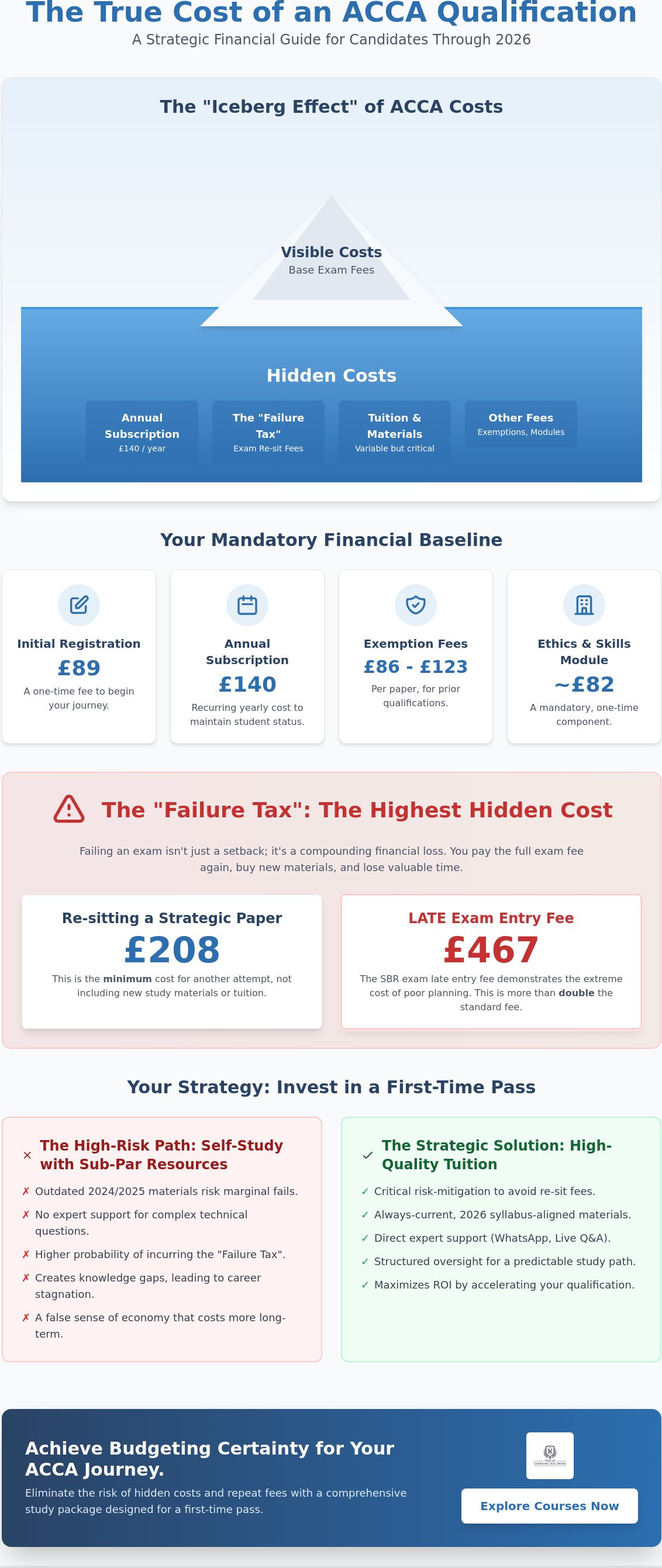
This guide offers a clear, 360-degree view of the financial landscape you'll face through 2026. We provide a strategic roadmap to minimize overlooked expenses, such as the £140 annual subscription and the high cost of late exam entries, which can reach £467 for Strategic Business Reporting. By adopting a high-efficiency study model, you can secure your path to qualification without the burden of redundant resource costs. We'll outline how to achieve budgeting certainty for the next four years, ensuring your professional advancement remains a controlled and predictable investment.
Key Takeaways
- Identify the "Iceberg Effect" of professional qualification expenses, where base exam fees represent only a fraction of the total required investment.
- Audit the hidden costs of studying for ACCA, from annual student subscriptions and exemption fees to the mandatory Ethics and Professional Skills module.
- Quantify the "failure tax" and understand why high-quality tuition serves as a critical risk-mitigation strategy to prevent redundant exam expenditure.
- Analyze the non-monetary toll of study, including opportunity costs and potential salary stagnation, to optimize your qualification timeline for maximum ROI.
- Master strategic budgeting techniques, such as the "first-time pass" approach, to ensure a predictable and cost-effective path to membership through 2026.
Beyond the Exam Fee: Defining the Hidden Costs of Studying for ACCA
Professional accountants understand that a balance sheet only tells half the story. The journey toward membership in the Association of Chartered Certified Accountants (ACCA) follows a similar logic. While headline exam fees are easy to track, the true financial commitment involves a complex layer of secondary expenses. Hidden costs are any expenditure required for success that is not billed directly as a mandatory ACCA exam fee. Candidates who ignore these variables often face liquidity issues mid-way through their qualification.
This "Iceberg Effect" characterizes professional qualifications in 2026. The visible exam fee is merely the tip of a much larger financial structure. Beneath the surface lies a network of administrative, academic, and regulatory costs that can inflate the total investment by over 50%. Factoring in the hidden costs of studying for ACCA early in your journey provides the professional protection you need. A proactive budgeting approach is now a strategic necessity to ensure your progress remains uninterrupted by unexpected financial hurdles.
The Mandatory Baseline: Registration and Annual Subscriptions
Your financial commitment begins with a one-time initial registration fee of £89. Timing this entry is critical; registering too early without a clear study plan can lead to wasted capital. Once registered, you're obligated to pay an annual student subscription fee of £140. This recurring cost applies regardless of whether you sit for exams that year, making it a significant factor in long-term planning. If you hold prior qualifications, you might qualify for exemptions. However, these aren't free. You'll pay £86 per Applied Knowledge paper and £123 per Applied Skills paper to bypass these modules, which is a necessary trade-off for a faster qualification route.
The Ethics and Professional Skills Module (EPSM)
The Ethics and Professional Skills Module is a mandatory component that many beginners overlook during their initial budget mapping. It is a one-time cost of approximately £81 to £83. While it is tempting to delay this expense, completing it before you reach the Strategic Professional level is a prudent move. It provides the foundational professional mindset required for higher-level papers, effectively turning a mandatory fee into a strategic academic advantage that helps you pass later exams on your first attempt.
The Academic Burden: Study Materials, Tuition, and the "Failure Tax"
While registration fees are fixed administrative figures, the variable expenses associated with learning represent the largest portion of the hidden costs of studying for ACCA. Many candidates view tuition as an optional luxury. It's more accurate to define it as a critical risk-mitigation tool. Investing in professional guidance significantly reduces the probability of incurring the "Failure Tax." This tax isn't a formal levy. It's the compounding financial loss of re-sitting an exam, which includes paying the full registration fee again, such as the £208 required for Strategic Professional papers, and purchasing updated revision kits. Beyond the invoice, you must consider the non-monetary costs of lost time and emotional fatigue.
The strategic advantage of modern tuition lies in direct accessibility. Support via WhatsApp and live Q&A sessions provides a professional safety net that self-study cannot replicate. These resources ensure that complex technical questions are resolved immediately, preventing the buildup of knowledge gaps that lead to exam failure. If you're looking to eliminate the risk of repeat fees, enrolling in a comprehensive study package provides the structured oversight necessary for a first-time pass.
The Hidden Cost of Sub-par Resources
Sub-par resources create a false sense of economy. Using outdated 2024 or 2025 PDFs found on social media is a high-risk strategy. The 2026 syllabus requires absolute precision. Even minor changes in tax thresholds or reporting standards can lead to a marginal fail. Consolidating your investment through structured ACCA courses online ensures that your study notes are current and exam-focused, protecting you from the hidden costs of studying for ACCA associated with misinformation.
Technology and Infrastructure Requirements
Remote Session CBEs necessitate a stable infrastructure. You'll need a reliable laptop and a high-speed internet connection to avoid technical disruptions during the three-hour window. Proficiency in Excel is no longer optional; it's a core requirement for modern accounting exams. For a deeper look at optimizing your environment, review our Accounting Exam Study Tips.
The Non-Monetary Toll: Time, Opportunity Cost, and Career Stagnation
Beyond the invoices paid to the professional body, candidates must account for the economic impact of their time. The opportunity cost of study represents one of the most substantial hidden costs of studying for ACCA. While you're immersed in revision, you aren't just spending money on fees; you're deferring potential income. In the 2026 job market, the "Stagnation Penalty" is a tangible reality for those who fail to progress at a steady pace. Every six-month delay in qualifying can represent thousands in lost salary increments. This delay keeps you at a junior or mid-level pay grade when your peers have already transitioned to senior roles with higher earning potential. This financial gap is compounded by the social cost of reduced time with family and the mental strain of prolonged academic pressure.
Time Off Work for Exams
The period leading up to an exam session often necessitates a withdrawal from professional duties. Choosing between unpaid leave and sacrificing annual leave constitutes a hidden salary deduction. If you use your holidays for study, you lose the restorative value of a break, which can diminish long-term productivity. Adopting an "Exam-Focused" learning methodology is a strategic way to reduce total study hours. By streamlining your preparation, you protect your annual leave and minimize the time spent away from revenue-generating work.
The Mental Health Investment
Academic burnout is a significant risk for those caught in the "Resit Loop." Repeated failure doesn't just cost money; it erodes professional confidence and mental well-being. Maintaining student motivation requires a structured environment that provides psychological security and a clear path forward. Professional support acts as a protective buffer, ensuring you stay on track toward your goals without the hidden costs of studying for ACCA associated with mental fatigue. To secure your career progression and avoid the financial drain of stagnation, consider enrolling in a structured ACCA study program that prioritizes efficiency.
Strategic Budgeting: How to Minimize Total ACCA Expenditure
True affordability in professional qualifications isn't found in minor "early bird" discounts, which often save only £10 to £20 per paper. Instead, the single most effective way to mitigate the hidden costs of studying for ACCA is the "First-Time Pass" strategy. By investing in high-quality preparation upfront, you bypass the compounding expenses of re-sits, which act as a significant drain on both capital and morale. This approach protects your financial resources and ensures your salary trajectory remains on an upward curve without the stagnation penalties associated with a prolonged qualification period.
When selecting a financial model, evaluate the merits of full access courses versus per-course enrollment. Bundling your modules often provides a more structured commitment and a lower average cost per paper, creating a stable environment for your 2026 studies. Additionally, don't overlook the potential for employer sponsorship. Build a professional business case for your firm that highlights the ROI of your membership, emphasizing how your increased technical proficiency will manage regulatory risks and improve operational efficiency within the company.
Choosing the Right Tuition Partner
Vertex Learning Solutions acts as a strategic partner by providing an integrated protective net for your academic journey. Our model focuses on passing efficiency, utilizing experienced tutors who help you avoid the technical pitfalls that lead to the "Failure Tax." This professional guidance ensures that your investment is optimized for a first-time result. For those currently navigating the mid-level modules, our ACCA Applied Skills Guide offers deeper insights into mastering these critical papers effectively.
2026 Budgeting Checklist
To ensure a cost-effective path to qualification, perform a quarterly audit of your planned spending. Identify "leaks" such as late entry fees, which can escalate to £467 for papers like Strategic Business Reporting, or the recurring cost of outdated materials. Use this checklist to maintain financial control:
- Audit registration deadlines: Always book during the standard entry window to avoid late penalties.
- Assess resource longevity: Only purchase materials guaranteed for the 2026 syllabus to prevent redundant spending.
- Review subscription status: Ensure your £140 annual fee is paid on time to avoid the £89 re-registration penalty.
Securing your professional future requires a disciplined, long-term financial view. Start your cost-effective ACCA journey with VLS and turn your qualification into a predictable, high-return investment.
Securing Your Professional Investment
Securing your professional future requires more than academic diligence; it demands a sophisticated understanding of the total financial commitment involved. As we've explored, the true hidden costs of studying for ACCA lie within the compounding nature of re-sits and the stagnation of your earning potential. By shifting your perspective from viewing tuition as a cost to seeing it as a strategic risk-mitigation tool, you protect your capital and accelerate your career progression. Efficiency is the only true path to affordability in a competitive global market.
Success in 2026 depends on precision and structured support. Our methodology ensures you don't navigate this complex environment alone. We provide exam-focused study notes and weekly live sessions specifically designed to maximize your efficiency. With dedicated tutor support via WhatsApp, you have a professional safety net that prevents minor technical gaps from turning into expensive failures. This structured approach is designed to ensure you pass the first time, every time, maintaining the integrity of your career timeline.
View our comprehensive ACCA course packages and start your journey today.
Your path to becoming a qualified professional is a marathon that rewards strategic planning. With the right guidance and a commitment to excellence, you'll achieve your goals while maintaining total control over your professional and financial investment.
Frequently Asked Questions
What is the total estimated cost of the ACCA qualification in 2026?
A candidate with no exemptions who passes every exam on the first attempt can expect to spend between £2,817 and £4,500 in 2026. This comprehensive figure includes initial registration, annual subscriptions, exam fees, and the cost of tuition and materials. If your journey extends beyond five years or includes multiple resits, the fees paid directly to the professional body alone can reach up to £4,200.
Are exam re-sits the biggest hidden cost in ACCA?
Yes, re-sits represent the most significant variable expense within the hidden costs of studying for ACCA. Failing a single Strategic Professional paper doesn't just stall your career; it requires a new entry fee of £208 and often necessitates the purchase of updated revision kits. This "Failure Tax" can quickly double the price of a single module, making first-time pass rates the most critical metric for your budget.
Do I have to pay for the Professional Ethics and Professional Skills module?
The Ethics and Professional Skills module (EPSM) is a mandatory requirement that carries a one-time fee of approximately £81 to £83. Many students forget to account for this cost because it sits outside the standard exam schedule. It's a professional necessity that you must complete to achieve membership, and it's strategically best to pay for and finish it before you attempt the Strategic Professional papers.
Can I save money by self-studying for ACCA?
Self-studying reduces upfront tuition costs but often increases the total investment by raising the risk of expensive re-sits. Professional guidance acts as a financial safeguard against the hidden costs of studying for ACCA by providing the technical precision needed to pass first time. When you consider that the cost of one failed exam often exceeds the price of a structured online course, professional tuition is the more economical choice.
Are there any hidden fees for Remote Session CBEs?
ACCA doesn't charge an additional administrative fee for remote exams, but the candidate must bear the cost of the required infrastructure. You're responsible for ensuring a reliable laptop and a stable, high-speed internet connection that meets the specific technical standards for invigilation. The real financial risk with remote sessions is missing the standard entry deadline, which can result in a late fee of up to £467 for certain papers.